
Personalized Calorie Calculator, BMI & Weight Goal Planner
Calculate calories, BMI, body fat, macros, meal plans, and personalized weight goals using established health and nutrition formulas.
Choose Your Health Goal
Each tool provides focused guidance while using the same comprehensive personalized health planning system.
Daily Calorie Calculator
Determine your Total Daily Energy Expenditure (TDEE) and target intake based on biometric and metabolic metrics.
BMI Calculator
Evaluate your weight against World Health Organization height indices to determine clinical health ranges.
Body Fat Calculator
Estimate essential fat mass and lean skeletal tissue ratios using standard Navy circumference calculations.
Macro Calculator
Calculate optimal daily allocations for proteins, carbohydrates, and fats matching your activity goals.
Protein Calculator
Determine optimal daily protein intake based on lean body mass, activity level, and athletic goals.
Water Intake Calculator
Calculate customized daily hydration baselines adjusted for climate, exercise, and metabolic rate.
Weight Goal Planner
Simulate weekly target changes and model metabolic adaptations to forecast milestone completion dates.
Meal Plan Generator
Generate dynamic, calorie-scaled vegetarian, vegan, keto, or non-veg meal plans with automatic grocery lists.
Food Calorie Calculator
Look up calories, protein, carbs and fat for 300 common foods and combine up to 4 per meal.
Your Details
Calculate Body Fat % (Optional)
Daily Energy Summary
Enter your biometrics to calibrate focused results.
This tool provides educational estimates only and is not medical advice. Consult a qualified healthcare professional before making major nutrition, weight-loss, or exercise decisions.
Welcome Back
Last Plan Generated: --Your Personalized Report
Complete your details above and create your personalized plan to view your results.
Your complete personalized report will appear here after you create your plan.
--kcal/day
To lose 0.5 kg per week.
--
--
--
Target:--
Your measurements indicate severe underweight status. This tool cannot provide weight-loss recommendations for this profile.
Maintenance-level calorie targets are shown instead. Please consult a qualified healthcare professional before making any dietary changes.
Your BMI falls below the normal range. Weight-loss recommendations may not be appropriate. Consider consulting a qualified healthcare professional.
Aggressive weight-loss pace has been disabled. Your calorie deficit has been limited to a maximum of 300 kcal/day for your safety.
Nutrition and calorie needs for individuals under 18 may differ from adult recommendations. Results should be reviewed with a parent, guardian, or healthcare professional.
Aggressive calorie deficits have been capped at 300 kcal/day. This tool is designed for general adult use.
You are already at your selected target weight. Maintenance recommendations are shown.
Your current weight matches your target. Calorie targets reflect your maintenance energy expenditure.
Weight Projection
Your daily targets: water intake recommendations, step goal, macro split, and calorie deficit guide
--L
--
Based on 35 ml per kg body weight baseline, adjusted for activity level and goal.
Formula: (Weight in kg * 35 ml) + Activity Adjustments--
--
Supports calorie expenditure and long-term weight management.
--/ 150 min
--
WHO recommends a minimum of 150 minutes of moderate-intensity physical activity per week for adults.
Your 7-Day Meal Plan
Portion sizes are dynamically optimized to align as closely as practical with your personalized calorie and macronutrient targets while using realistic serving sizes appropriate for your selected dietary preferences, region, and budget.
Nutrition estimates are based on established food composition databases and standard serving references. Actual values may vary due to ingredient brands, regional food products, preparation methods, recipes, and natural food variability.
Food exclusions personalize meal suggestions but do not guarantee an allergen-free meal plan. Always review ingredient labels carefully and consult a qualified healthcare professional if you have severe food allergies, medical conditions, or specific dietary requirements.
--
----
----
----
--Your Personalized Nutrition Report is Ready
Your Personalized Nutrition Report Includes
- ✓7-Day Meal Plan
- ✓Weight Goal Timeline & Estimated Goal Date
- ✓Daily Calorie & Macro Targets
- ✓Grocery Shopping List
- ✓Water Intake & Activity Goals
- ✓Personalized Health Summary
- ✓Recommended Portion Sizes
Generate Your Personalized Nutrition Report
We've calculated your calories, macros, hydration targets, activity goals, and projected timeline. Generate your customized meal plan tailored to your preferences.
Why This Plan Works
Scientifically Calibrated Calculations
Used as the core BMR predictor, validated by clinical reviews as the most consistent baseline predictor in modern weight management.
BMR = 10*W(kg) + 6.25*H(cm) - 5*A(y) + s (+5 Male, -161 Female)Computes body fat percent dynamically from waist, neck, and height dimensions without requiring bioelectrical impedance scales.
Male: 86.01*log10(Waist-Neck) - 70.041*log10(Height) + 36.76Female: 163.205*log10(Waist+Hip-Neck) - 97.684*log10(Height) - 78.387Classifies BMI indexes into underweight, normal weight, overweight, and obese ranges as documented by the World Health Organization.
BMI = Weight(kg) / (Height(m))^2Why These Formulas Are Trusted
Scientifically calibrated formulas.
How Calories Are Calculated
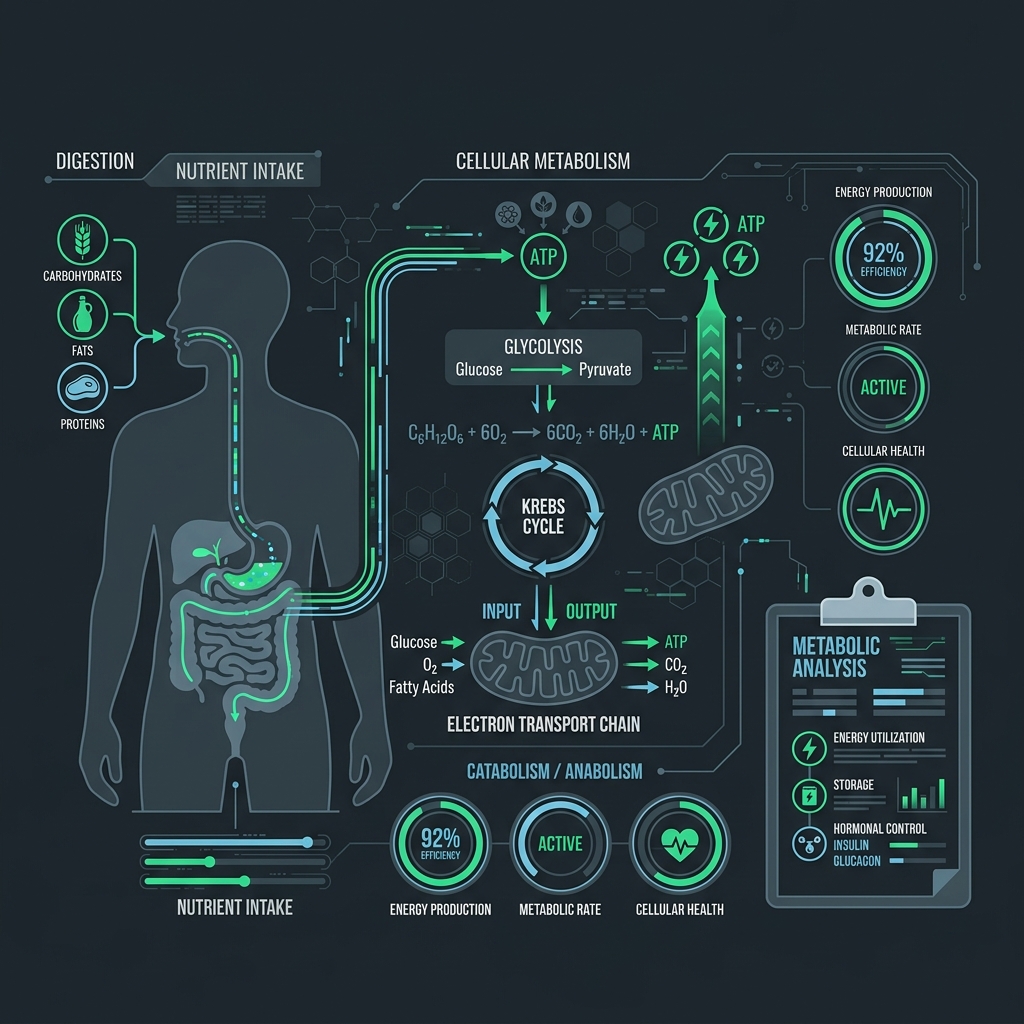
Calories are calculated by estimating your Basal Metabolic Rate (BMR)—the energy required to sustain life at rest—using the clinically validated Mifflin-St Jeor Equation.
Women: BMR = 10 × weight (kg) + 6.25 × height (cm) - 5 × age (y) - 161
What Is TDEE
Total Daily Energy Expenditure (TDEE) is the total number of calories your body burns in 24 hours, incorporating your active movement, workouts, and lifestyle factors mapped to resting metabolism.
• Sedentary (1.2) • Light (1.375) • Moderate (1.55) • Active (1.725) • Very Active (1.9)
What Is BMI
Body Mass Index (BMI) is a standardized screening metric established by the World Health Organization (WHO) to evaluate body mass categories relative to height.
• Underweight (< 18.5) • Normal (18.5 – 24.9) • Overweight (25 – 29.9) • Obese (≥ 30)
What Is Body Fat %
Body Fat Percentage represents the proportion of adipose tissue relative to lean mass, calculated using neck, waist, and hip circumference measurements via the US Navy method.
Women: BF% = 163.205 × log10(waist + hip - neck) - 97.684 × log10(height) - 78.387
How Weight Projection Works
Weight projection estimates the rate of body mass change by simulating caloric deficits or surpluses over time, enforcing clinical floor safety limits to prevent nutrient deprivation.
• 1 kg of body fat loss ≈ 7,700 kcal cumulative deficit
• Safety floors: 1,500 kcal/day (males) and 1,200 kcal/day (females)