
Daily Calorie Calculator
Estimate your daily calorie needs for weight loss, maintenance, or weight gain. Our free daily calorie calculator calculates your Basal Metabolic Rate (BMR) and Total Daily Energy Expenditure (TDEE) using your age, sex, height, weight, and activity level to give you a personalized daily calorie target.
Your Details
Calculate Body Fat % (Optional)
Daily Energy Summary
Enter your biometrics to calibrate focused results.
This tool provides educational estimates only and is not medical advice. Consult a qualified healthcare professional before making major nutrition, weight-loss, or exercise decisions.
Welcome Back
Last Plan Generated: --Your Personalized Report
Complete your details above and create your personalized plan to view your results.
Your complete personalized report will appear here after you create your plan.
--kcal/day
To lose 0.5 kg per week.
--
--
--
Target:--
Your measurements indicate severe underweight status. This tool cannot provide weight-loss recommendations for this profile.
Maintenance-level calorie targets are shown instead. Please consult a qualified healthcare professional before making any dietary changes.
Your BMI falls below the normal range. Weight-loss recommendations may not be appropriate. Consider consulting a qualified healthcare professional.
Aggressive weight-loss pace has been disabled. Your calorie deficit has been limited to a maximum of 300 kcal/day for your safety.
Nutrition and calorie needs for individuals under 18 may differ from adult recommendations. Results should be reviewed with a parent, guardian, or healthcare professional.
Aggressive calorie deficits have been capped at 300 kcal/day. This tool is designed for general adult use.
You are already at your selected target weight. Maintenance recommendations are shown.
Your current weight matches your target. Calorie targets reflect your maintenance energy expenditure.
Weight Projection
Your daily targets: water intake recommendations, step goal, macro split, and calorie deficit guide
--L
--
Based on 35 ml per kg body weight baseline, adjusted for activity level and goal.
Formula: (Weight in kg * 35 ml) + Activity Adjustments--
--
Supports calorie expenditure and long-term weight management.
--/ 150 min
--
WHO recommends a minimum of 150 minutes of moderate-intensity physical activity per week for adults.
Your 7-Day Meal Plan
Portion sizes are dynamically optimized to align as closely as practical with your personalized calorie and macronutrient targets while using realistic serving sizes appropriate for your selected dietary preferences, region, and budget.
Nutrition estimates are based on established food composition databases and standard serving references. Actual values may vary due to ingredient brands, regional food products, preparation methods, recipes, and natural food variability.
Food exclusions personalize meal suggestions but do not guarantee an allergen-free meal plan. Always review ingredient labels carefully and consult a qualified healthcare professional if you have severe food allergies, medical conditions, or specific dietary requirements.
--
----
----
----
--Your Personalized Nutrition Report is Ready
Your Personalized Nutrition Report Includes
- ✓7-Day Meal Plan
- ✓Weight Goal Timeline & Estimated Goal Date
- ✓Daily Calorie & Macro Targets
- ✓Grocery Shopping List
- ✓Water Intake & Activity Goals
- ✓Personalized Health Summary
- ✓Recommended Portion Sizes
Generate Your Personalized Nutrition Report
We've calculated your calories, macros, hydration targets, activity goals, and projected timeline. Generate your customized meal plan tailored to your preferences.
Why This Plan Works
Scientifically Calibrated Calculations
Used as the core BMR predictor, validated by clinical reviews as the most consistent baseline predictor in modern weight management.
BMR = 10*W(kg) + 6.25*H(cm) - 5*A(y) + s (+5 Male, -161 Female)Computes body fat percent dynamically from waist, neck, and height dimensions without requiring bioelectrical impedance scales.
Male: 86.01*log10(Waist-Neck) - 70.041*log10(Height) + 36.76Female: 163.205*log10(Waist+Hip-Neck) - 97.684*log10(Height) - 78.387Classifies BMI indexes into underweight, normal weight, overweight, and obese ranges as documented by the World Health Organization.
BMI = Weight(kg) / (Height(m))^2Why These Formulas Are Trusted
How the Calorie Calculator Works
Determining your ideal daily calorie intake requires understanding how much energy your body expends daily. Our daily calorie calculator works in 3 clear steps:
Enter your biological sex, age, height, and weight (or check your baseline status with our BMI Calculator).
Choose your average physical activity factor ranging from sedentary to highly active.
Instantly view your BMR, maintenance TDEE, and recommended target calories for fat loss or gain.
What Are Maintenance Calories?
Your maintenance calories (also known as Total Daily Energy Expenditure or TDEE) represent the exact number of calories your body burns in 24 hours. Consuming equal to your maintenance calories keeps your body weight stable. Your total daily expenditure is composed of three primary components:
- Basal Metabolic Rate (BMR) ~ 60–70%: The energy your body burns at rest to keep internal organs functioning, regulate body temperature, and sustain cellular life.
- Physical Activity & NEAT ~ 20–30%: Energy expended during exercise, sports, walking, standing, and non-exercise daily movement.
- Thermic Effect of Food (TEF) ~ 10%: The energy expended digesting, absorbing, and processing macronutrients (protein requires the most energy to digest).
BMR vs TDEE: What’s the Difference?
It is important not to confuse BMR with TDEE. Your BMR is the baseline energy needed if you stayed in bed all day without moving. Your TDEE is your real-world calorie burn after factoring in all physical movement.
We calculate BMR using the clinically validated Mifflin-St Jeor Equations:
BMR = 10 × weight (kg) + 6.25 × height (cm) - 5 × age (y) + 5BMR = 10 × weight (kg) + 6.25 × height (cm) - 5 × age (y) - 161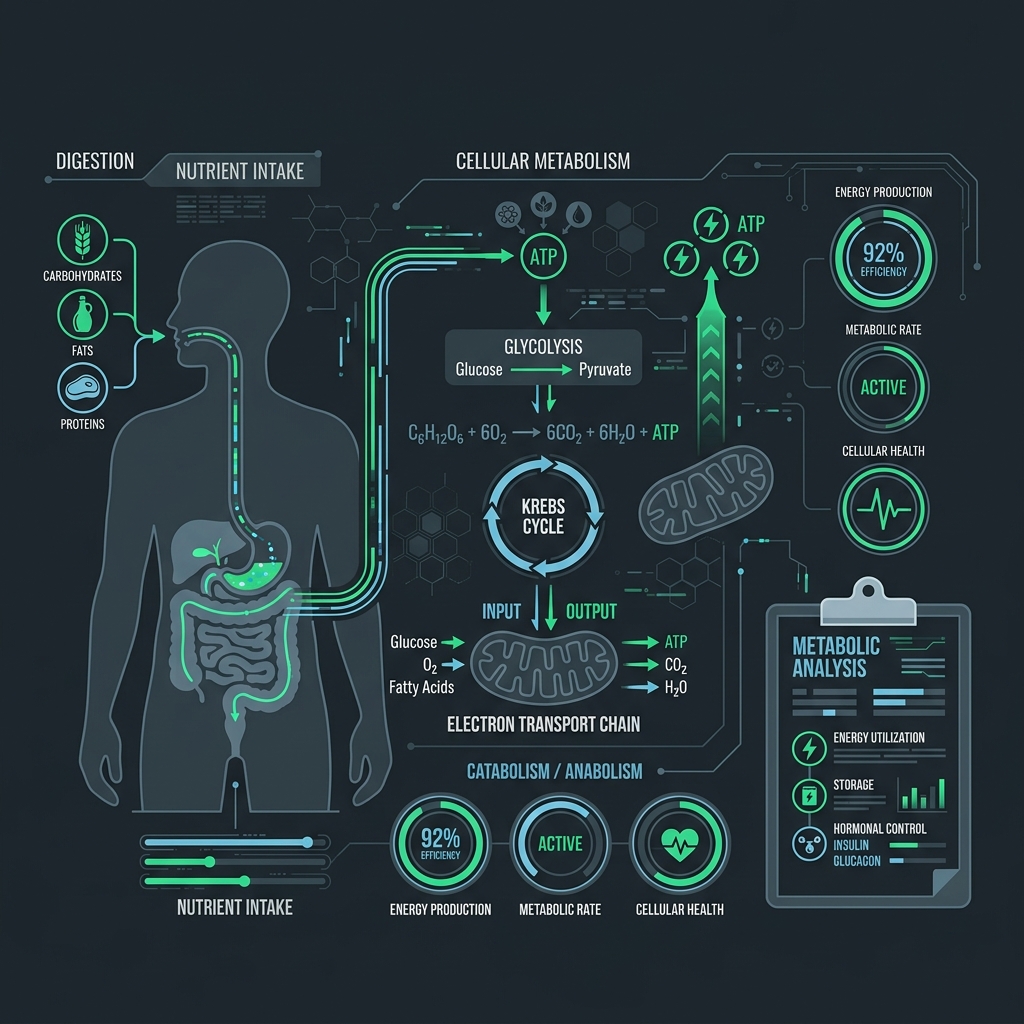
Calories for Weight Loss, Maintenance, and Weight Gain
Once your maintenance baseline (TDEE) is established, your target daily calorie intake is adjusted according to your weight goal:
Weight Loss Calorie Targets (Calorie Deficit)
To lose weight, you must create a calorie deficit by consuming less than your TDEE. A deficit of 300 to 500 kcal daily yields a safe, gradual fat loss of 0.5 to 1 lb (0.25 to 0.5 kg) per week.
Weight Maintenance Calories
Eating equal to your maintenance TDEE keeps your body weight stable while supporting athletic recovery, hormonal balance, and body recomposition.
Weight Gain Calorie Targets (Calorie Surplus)
To build muscle mass or gain body weight, consume a daily surplus of 250 to 500 kcal above maintenance. When paired with resistance training, this fuels clean muscle growth.
Explore Calorie Goal Calculators
The calculator above gives your full BMR, TDEE and daily calorie target. If you are focused on one specific goal, these specialized guides walk through the numbers step by step:
How Activity Level Changes Your Calorie Needs
Physical activity has the single largest variable impact on your daily calorie burn. Activity multipliers convert your BMR into TDEE:
| Activity Category | Physical Description | PAL Multiplier |
|---|---|---|
| Sedentary | Desk job, little to no formal exercise | 1.200 × BMR |
| Lightly Active | Light exercise 1–3 days per week | 1.375 × BMR |
| Moderately Active | Moderate exercise 3–5 days per week | 1.550 × BMR |
| Very Active | Hard exercise 6–7 days per week | 1.725 × BMR |
Why Your Actual Calorie Needs May Differ
Calorie calculators provide highly accurate population-level estimates. However, individual real-world calorie burn can vary by 5% to 10% due to muscle mass percentage, genetic thyroid variations, sleep deprivation, stress levels, and daily fidgeting (NEAT). Track your body weight trends over 2–3 weeks and adjust calorie targets accordingly.
What to Do After Calculating Your Calories
Once you know your daily calorie requirement, turn your calorie target into an actionable fitness and nutrition plan:
To log the calories you actually eat, check the Food Calorie Calculator, which covers 300 common foods and lets you combine up to 4 foods per meal for a full meal total.
Why Use This Calculator?
Recommended Next Step
Common Calorie Calculator Questions
How many calories should I eat per day?
Your daily calorie needs depend on your age, sex, height, weight, physical activity level, and goal (weight loss, maintenance, or weight gain). Our daily calorie calculator uses validated metabolic equations to calculate your personalized daily requirement.
What is a calorie calculator?
A calorie calculator is an online health tool that estimates your Basal Metabolic Rate (BMR) and Total Daily Energy Expenditure (TDEE) to calculate how many calories you need daily to maintain, lose, or gain body weight.
How are my daily calorie needs calculated?
We calculate your BMR using the Mifflin-St Jeor formula based on your weight, height, age, and biological sex. We then multiply your BMR by your selected activity level factor to determine your maintenance calories (TDEE).
What are maintenance calories?
Maintenance calories (or TDEE) represent the total daily energy expenditure required to maintain your current body weight. Eating equal to your maintenance calories keeps your weight stable.
How many calories should I eat to lose weight?
To lose fat safely, aim for a daily calorie deficit of 300 to 500 calories below your maintenance TDEE. This supports a sustainable loss rate of approximately 0.5 to 1 lb (0.25 to 0.5 kg) per week without triggering extreme hunger.
How many calories should I eat to gain weight?
To gain weight or build muscle, consume a daily surplus of 250 to 500 calories above your maintenance TDEE. Combined with resistance training, this supports lean muscle synthesis while minimizing excess fat gain.
What is the difference between BMR and TDEE?
BMR (Basal Metabolic Rate) is the baseline energy your body burns at complete rest just to keep organs functioning. TDEE (Total Daily Energy Expenditure) is your total energy burn after adding all physical activity, standing, and daily movement.
Why might my real calorie needs differ from the estimate?
Calculator results are statistical estimates. Real-world energy expenditure can vary based on individual genetic factors, lean muscle mass percentage, thyroid hormone levels, sleep quality, and daily step count differences.
Should I recalculate my calorie needs after losing weight?
Yes. As your body mass drops, your BMR and TDEE naturally decrease because a smaller body requires less energy to function. Recalculate your calorie needs every 5 to 10 lbs (2 to 5 kg) lost to keep your deficit accurate.
Medical Disclaimer: Calculations provided by this daily calorie calculator are estimates based on standard population formulas. They do not constitute medical advice or clinical prescriptions. Minimum intake floors (1,200 kcal/day for women and 1,500 kcal/day for men) should be respected to prevent nutrient deficiencies. Consult a qualified physician or registered dietitian for clinical guidance.