
Daily Macro Calculator
Get personalized daily targets for protein, carbohydrates, and fat based on your calorie needs, body weight, activity level, and weight goal — whether you are losing weight, maintaining, or building muscle.
Your Details
Calculate Body Fat % (Optional)
Macronutrient Summary
Enter your biometrics to calibrate focused results.
This tool provides educational estimates only and is not medical advice. Consult a qualified healthcare professional before making major nutrition, weight-loss, or exercise decisions.
Welcome Back
Last Plan Generated: --Your Personalized Report
Complete your details above and create your personalized plan to view your results.
Your complete personalized report will appear here after you create your plan.
--kcal/day
To lose 0.5 kg per week.
--
--
--
Target:--
Your measurements indicate severe underweight status. This tool cannot provide weight-loss recommendations for this profile.
Maintenance-level calorie targets are shown instead. Please consult a qualified healthcare professional before making any dietary changes.
Your BMI falls below the normal range. Weight-loss recommendations may not be appropriate. Consider consulting a qualified healthcare professional.
Aggressive weight-loss pace has been disabled. Your calorie deficit has been limited to a maximum of 300 kcal/day for your safety.
Nutrition and calorie needs for individuals under 18 may differ from adult recommendations. Results should be reviewed with a parent, guardian, or healthcare professional.
Aggressive calorie deficits have been capped at 300 kcal/day. This tool is designed for general adult use.
You are already at your selected target weight. Maintenance recommendations are shown.
Your current weight matches your target. Calorie targets reflect your maintenance energy expenditure.
Weight Projection
Your daily targets: water intake recommendations, step goal, macro split, and calorie deficit guide
--L
--
Based on 35 ml per kg body weight baseline, adjusted for activity level and goal.
Formula: (Weight in kg * 35 ml) + Activity Adjustments--
--
Supports calorie expenditure and long-term weight management.
--/ 150 min
--
WHO recommends a minimum of 150 minutes of moderate-intensity physical activity per week for adults.
Your 7-Day Meal Plan
Portion sizes are dynamically optimized to align as closely as practical with your personalized calorie and macronutrient targets while using realistic serving sizes appropriate for your selected dietary preferences, region, and budget.
Nutrition estimates are based on established food composition databases and standard serving references. Actual values may vary due to ingredient brands, regional food products, preparation methods, recipes, and natural food variability.
Food exclusions personalize meal suggestions but do not guarantee an allergen-free meal plan. Always review ingredient labels carefully and consult a qualified healthcare professional if you have severe food allergies, medical conditions, or specific dietary requirements.
--
----
----
----
--Your Personalized Nutrition Report is Ready
Your Personalized Nutrition Report Includes
- ✓7-Day Meal Plan
- ✓Weight Goal Timeline & Estimated Goal Date
- ✓Daily Calorie & Macro Targets
- ✓Grocery Shopping List
- ✓Water Intake & Activity Goals
- ✓Personalized Health Summary
- ✓Recommended Portion Sizes
Generate Your Personalized Nutrition Report
We've calculated your calories, macros, hydration targets, activity goals, and projected timeline. Generate your customized meal plan tailored to your preferences.
Why This Plan Works
Scientifically Calibrated Calculations
Used as the core BMR predictor, validated by clinical reviews as the most consistent baseline predictor in modern weight management.
BMR = 10*W(kg) + 6.25*H(cm) - 5*A(y) + s (+5 Male, -161 Female)Computes body fat percent dynamically from waist, neck, and height dimensions without requiring bioelectrical impedance scales.
Male: 86.01*log10(Waist-Neck) - 70.041*log10(Height) + 36.76Female: 163.205*log10(Waist+Hip-Neck) - 97.684*log10(Height) - 78.387Classifies BMI indexes into underweight, normal weight, overweight, and obese ranges as documented by the World Health Organization.
BMI = Weight(kg) / (Height(m))^2Why These Formulas Are Trusted
How the Macro Calculator Works
Your daily macro targets are built from your calorie goal in three clear steps — starting with the energy your body needs, then dividing that energy across protein, carbohydrates, and fat.
Your BMR is calculated from your body data, multiplied by your activity factor to find your maintenance calories (TDEE), then adjusted up or down for your weight goal.
A goal-based macro split sets the percentage of calories from protein, carbs, and fat — higher protein for weight loss, carb-forward for muscle gain.
Each macro's calorie percentage is converted into grams you can track: protein and carbs at 4 kcal/g, fat at 9 kcal/g.
What Are Macronutrients?
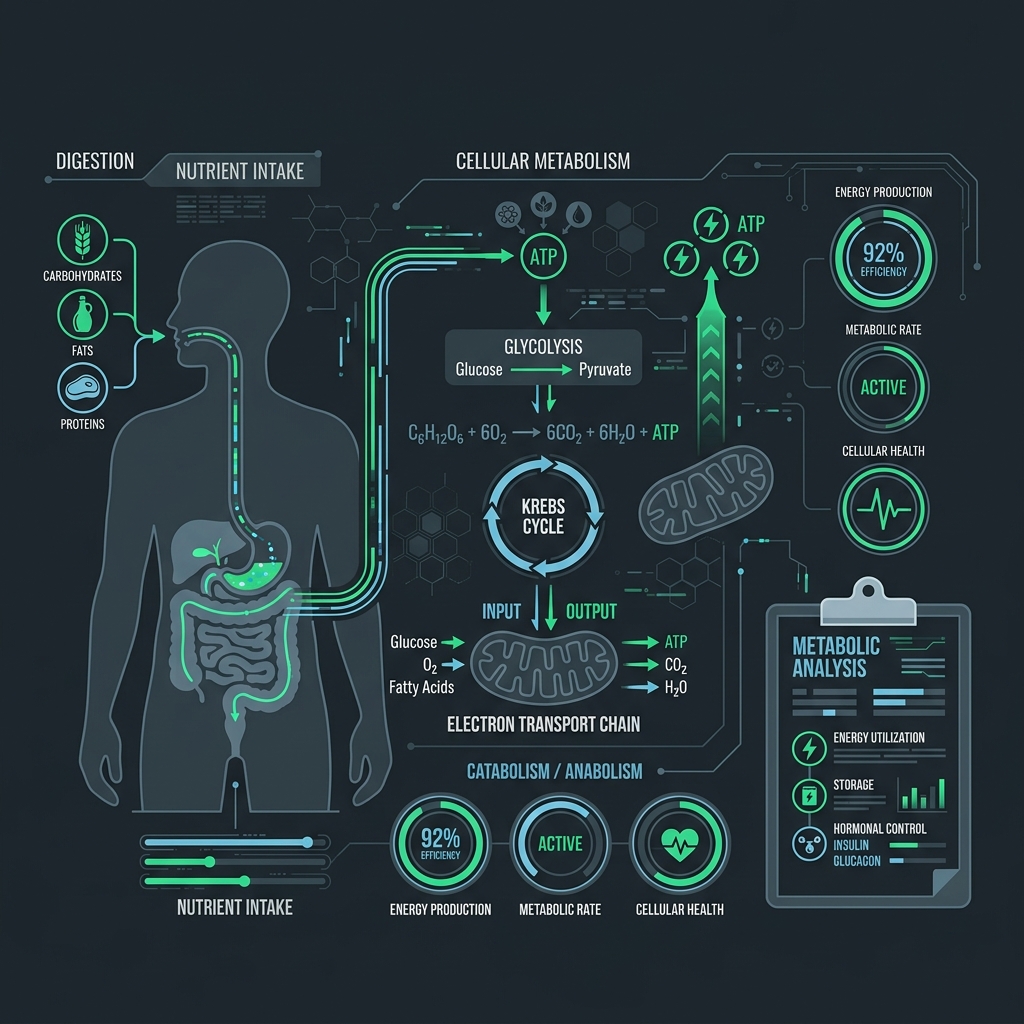
Macronutrients are the nutrients your body needs in large daily amounts for energy and function. Each has a distinct role and calorie density:
Required for tissue repair, cellular enzymatic function, immune health, and muscle synthesis.
The primary and fastest fuel source for muscles and the nervous system. Glycogen storage.
Essential for hormone production, cellular membrane structure, brain health, and nutrient absorption.
How Protein, Carbs & Fat Targets Are Calculated
Your gram targets come from applying a goal-based percentage split to your calorie target, then dividing by each macro's calorie density:
- Protein (g) = (Calorie target × Protein %) ÷ 4 kcal/g
- Carbohydrates (g) = (Calorie target × Carbs %) ÷ 4 kcal/g
- Fat (g) = (Calorie target × Fat %) ÷ 9 kcal/g
For example, on a 2,000 kcal weight-loss target using the tool's 35% / 35% / 30% split: protein = (2,000 × 0.35) ÷ 4 = 175 g, carbs = (2,000 × 0.35) ÷ 4 = 175 g, and fat = (2,000 × 0.30) ÷ 9 ≈ 67 g. Those grams sum back to your 2,000 kcal target.
The calculator applies the following goal-based splits, in line with commonly referenced Acceptable Macronutrient Distribution Ranges (AMDR):
| Goal | Protein | Carbs | Fats |
|---|---|---|---|
| Weight Loss | 35% | 35% | 30% |
| Maintenance | 25% | 45% | 30% |
| Muscle Gain | 20% | 50% | 30% |
Macros for Weight Loss, Maintenance & Muscle Gain
Your macro priorities shift with your goal. The split above shows how the calculator adjusts the balance; the reasoning is summarized below.
Macros for Weight Loss
The calculator emphasizes protein (35%) during weight loss because higher protein helps preserve lean muscle while you eat in a calorie deficit. Carbs and fat fill the remaining calories for energy and satiety. Start from your daily calorie needs and build your split from there.
Macros for Maintenance
At maintenance the calculator balances energy with a carb-forward split (45% carbs, 25% protein, 30% fat), matching your intake to your total daily energy expenditure so your weight stays stable.
Macros for Muscle Gain
For muscle gain the calculator uses a higher-carb split (50% carbs, 20% protein, 30% fat) to fuel training and support a modest calorie surplus. For protein refined to your exact body weight, see the Protein Calculator.
Macro Ratios vs Gram Targets
A macro percentage (ratio) describes what share of your total calories each nutrient provides. A gram target tells you how much of each to actually eat. Both are shown in the results, but grams are what you log and track — they are what appear on food labels.
Why the distinction matters
The same percentage split produces different gram targets at different calorie intakes. A 30% protein split on 1,600 kcal equals ~120 g, while on 2,400 kcal it equals ~180 g. Tracking grams keeps your actual intake aligned with your calorie goal as your targets change over time.
What to Do After Calculating Your Macros
Your macro targets are the center of a complete nutrition plan. Chain them into the rest of your journey:
To hit your macro targets in real meals, use the Food Calorie Calculator to check the protein, carbs and fat in the foods you eat — combine up to 4 foods to see whether a meal fits your split.
Why Use This Calculator?
Recommended Next Step
Common Macro Calculator Questions
What is a macro calculator?
A macro calculator estimates your personalized daily targets for protein, carbohydrates, and fat in grams. It converts your calorie goal — derived from your body data, activity level, and weight goal — into a practical daily breakdown you can track and plan meals around.
How do I calculate my macros?
The calculator first estimates your calorie target from your age, sex, height, weight, activity level, and goal using standard metabolic equations. It then applies a goal-based macro split (percentage of calories) and converts each percentage into grams using 4 kcal per gram for protein and carbs and 9 kcal per gram for fat.
How much protein, carbs and fat should I eat per day?
There is no single universal number — your targets depend on your calorie goal and body weight. For example, on a 2,000 kcal weight-loss plan this calculator applies 35% protein (175 g), 35% carbs (175 g), and 30% fat (~67 g). Use the calculator above for targets based on your own data.
What macro ratio is best for weight loss?
For weight loss this calculator uses a high-protein split (35% protein, 35% carbs, 30% fat) because higher protein supports lean mass preservation during a calorie deficit. These are planning ranges, not rigid medical rules — adjust protein up or carbs down based on your satiety and training needs.
What macros should I use for muscle gain?
For muscle gain this calculator uses a carb-forward split (50% carbs, 20% protein, 30% fat) to fuel training and support a calorie surplus. If you want a protein target refined for your exact body weight, use our dedicated Protein Calculator.
Should I track macro percentages or grams?
Track grams. Percentages describe the proportion of your calories coming from each macro, but grams are what appear on food labels and what you actually eat each day. This calculator provides both so you can see the ratio behind the numbers.
How many calories are in protein, carbs and fat?
Protein provides 4 kcal per gram, carbohydrates provide 4 kcal per gram, and fat provides 9 kcal per gram. These standard energy values are what convert your percentage split into daily gram targets.
Do my macros need to add up to my calorie target?
Yes. Because each gram of protein and carbs contributes 4 kcal and each gram of fat contributes 9 kcal, the grams from your macro targets sum back to your total calorie goal. This is how the macro split stays consistent with your daily calorie target.
What should I do after calculating my macros?
Use your targets to build the rest of your plan: refine your protein needs with the Protein Calculator, plan your weight goal and timeline with the Weight Goal Planner, and turn your macros into actual meals with the Meal Plan Generator.
Medical Disclaimer: Daily macro targets provided by this calculator are estimates based on standard population-level equations and planning ranges. They are not medical prescriptions or clinical guidance. Individual needs vary with health status, activity, and body composition. Consult a qualified physician or registered dietitian before making significant changes to your diet, especially if you have a medical condition, are pregnant, or have special nutritional requirements.